CommNet
Network Infrastructure Simulator
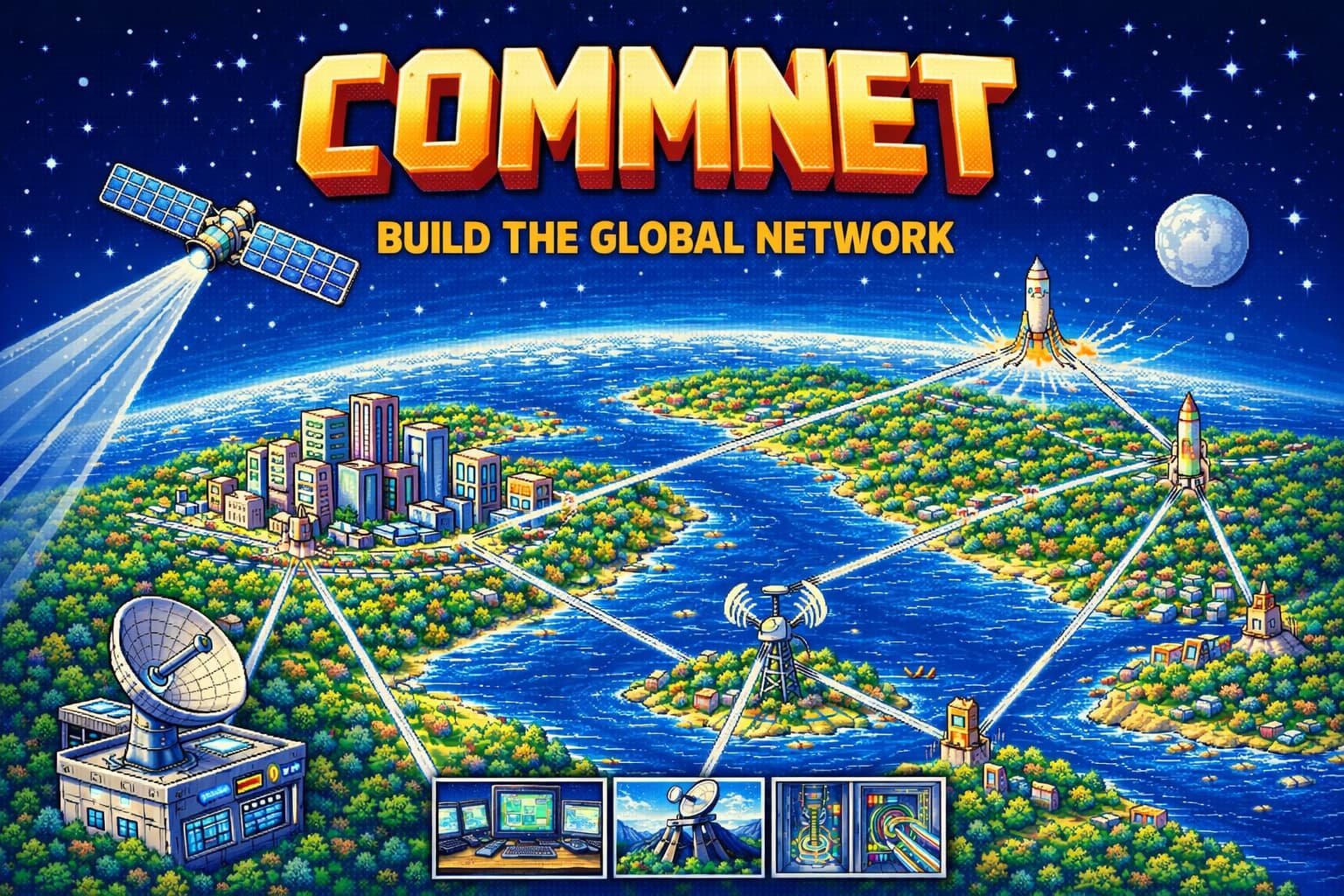
CommNet is a browser-based simulation game where you plan and operate a regional communications network. Place POPs and NOCs, connect links, and balance capacity, latency, and operating costs as demand changes over time. Every build decision affects coverage, customer satisfaction, and long-term revenue.
How to Play
1. Establish the backbone.
Place a NOC first, then build POPs and link POP-to-NOC using Backhaul.
2. Connect demand.
Demand nodes earn revenue when they can reach a POP or NOC and receive bandwidth.
3. Expand and stabilize.
Use overlays to spot congestion, latency, and coverage gaps. Add redundancy and upgrades.
Winning rhythm.
- Start with one NOC and one POP.
- Use backhaul for backbone, fiber for heavy traffic, microwave for fast cheap hops.
- Build alternative paths to survive outages and storms.
- Balance maintenance costs against revenue growth.
What Drives Outcomes
- Connectivity: POPs must backhaul to a NOC before serving nodes.
- Capacity: Links saturate; congestion reduces effective delivery.
- Latency: Longer paths reduce satisfaction and revenue.
- Reliability: Outages and storms reduce throughput.
- Economy: Build costs and maintenance scale with link length.
- Satisfaction: Delivered bandwidth and latency drive payouts.
Signals to Watch
- Capacity overlay: highlights bottlenecked links.
- Latency overlay: shows slow routes and long hops.
- Coverage overlay: reveals disconnected demand nodes.
- Alerts bar: surfaces outages and congestion daily.
- Profit & Loss: shows current vs. previous day net.
Tools and How They Work
Infrastructure
- NOC: core backbone hub, start here.
- POP: local hub, must backhaul to a NOC.
- Microwave Tower: relay for shorter microwave hops.
- Ground Station: required for satellite gateway rules.
Links
- Backhaul: POP/NOC nodes only, higher capacity.
- Fiber: long-range capacity, higher cost per tile.
- Microwave: cheap, low capacity, max 32 tiles.
Services
- Satellite: add service to a demand node.
- Requires ground station within 15 tiles of a POP/NOC.
- Must connect ground station to a NOC by fiber.
Examples
Island Chain Starter
One NOC on the main island, backhaul to two POPs, microwave hops between nearby islands. Use satellite for the farthest node.
Metro Backbone
Multiple POPs tied to a central NOC with backhaul. Add fiber rings to split traffic and reduce latency.
Storm-Resilient Grid
Mix fiber and backhaul for redundancy. Avoid relying on a single microwave path during storms.
Ready to build your first backbone? Jump in and run the network from day one.
Play CommNet Now